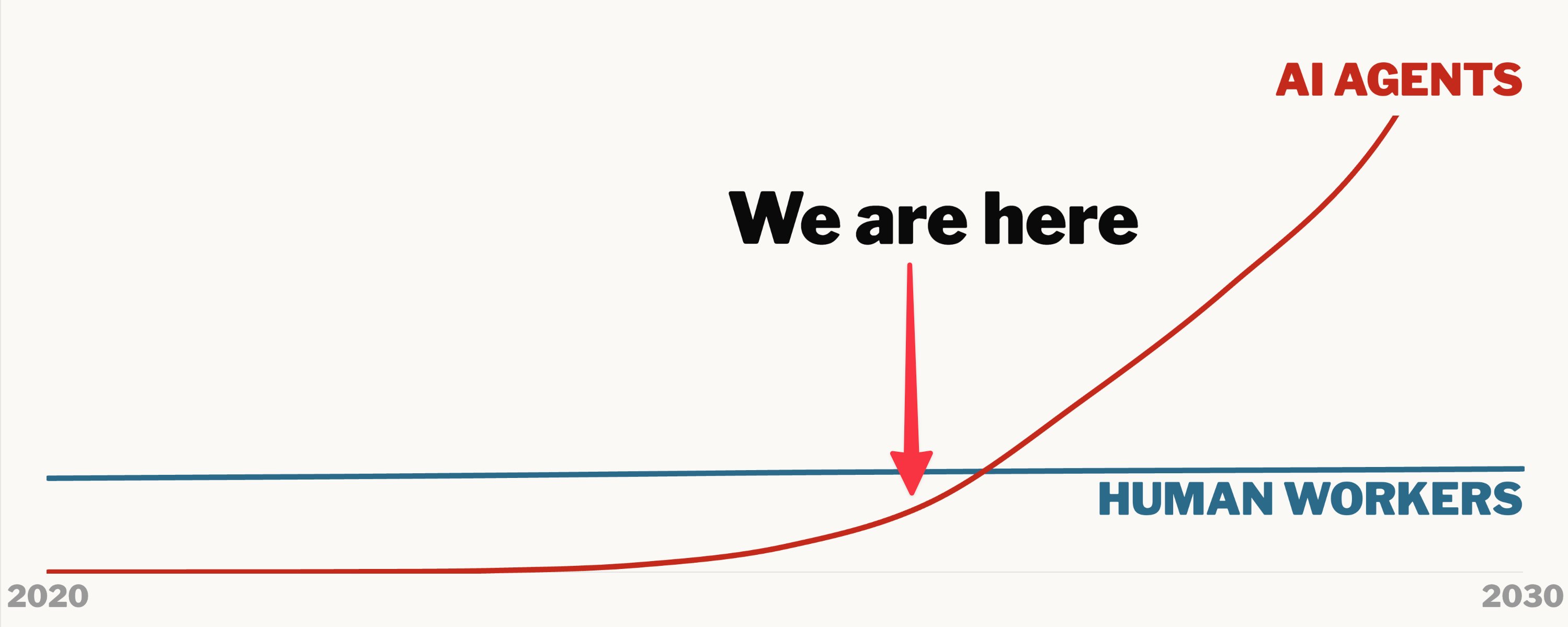
(And there's a massive existential threat that nobody's talking about)
Between September 2025 and April 2026, something unprecedented happened: every major payment and commerce company in the world built large-scale AI agent infrastructure in a six-month window.
- Google, PayPal, and Shopify: Agent Payments Protocol (Sep 2025)
- Stripe and OpenAI: Agentic Commerce Protocol (Dec 2025)
- Coinbase: Agentic Wallets (Feb 2026)
- Visa: Intelligent Commerce Connect (Apr 2026)
Wait. What's going on here?
An Economics Paradox
In 1865, an economist named William Stanley Jevons observed that the newly released Watt steam engine was vastly more efficient than the earlier Newcomen design. Intuitively, you'd expect coal consumption to drop as a result.
The opposite actually happened: consumption increased more than 10x between 1830 and 1860.
The efficiency gain made steam power so cheap that entirely new industries adopted it: cotton mills, railways, steamships, ironworks, etc. The lesson is clear. When something gets 100x cheaper, you don't use the same amount for less money. You actually use 10,000x more.
Every historical precedent confirms this. When storage got 30 million times cheaper, total data stored exploded. When bandwidth got orders of magnitude cheaper, internet traffic increased by over 5,000,000%. When computing got millions of times cheaper per FLOP, total spending went up (and by a lot). We could go on and on and on.
This is the exact pattern happening to AI agents right now.
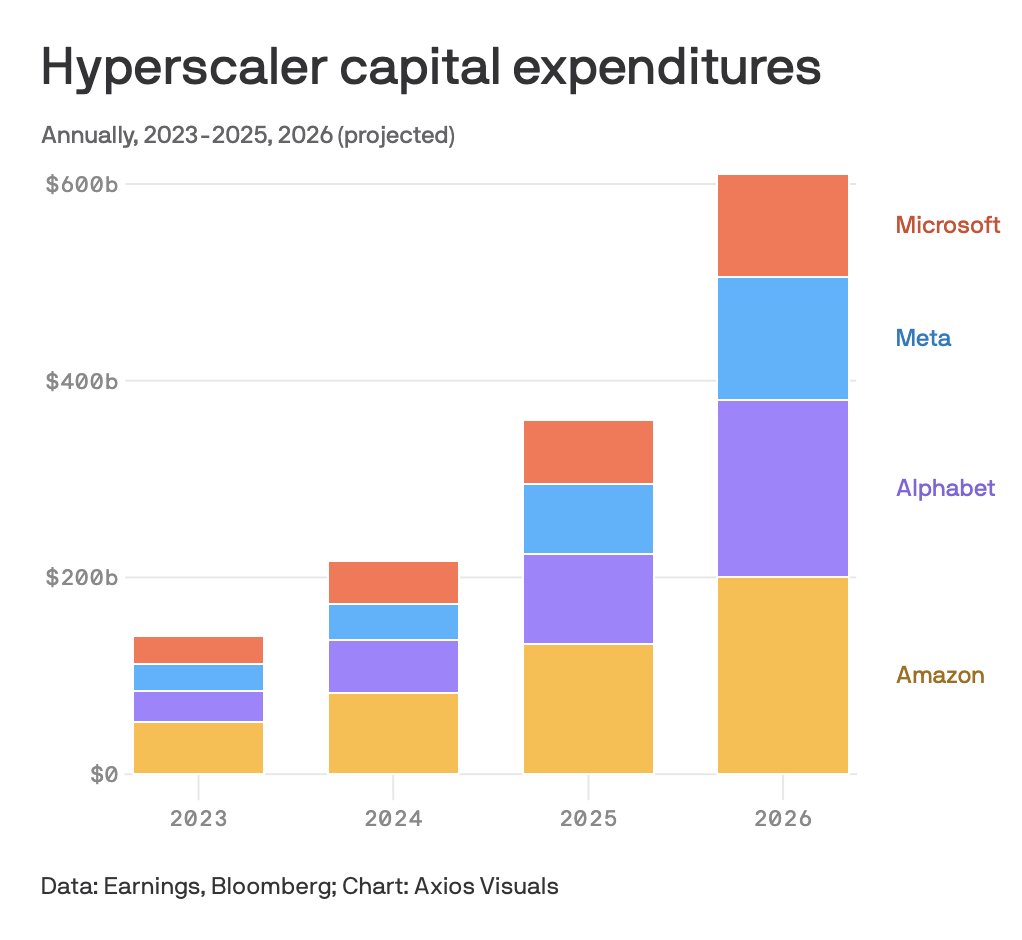
Source: Axios
GPT-4 launched in 2023 at $30 per million tokens. Sixteen months later, OpenAI delivered the same quality for 15 cents. A 200x price drop in under two years.
Let's do some more math…
A simple agent that runs 24/7/365 will cost you around 15,000 per year. This makes the agent's effective rate between 4 and 6 cents per hour.
This is more than 100 times cheaper than the cheapest human labor in America, while at the same time running at least four times as many hours.
So what happens when agents are now cheaper than a burger flipper at McDonald's? Wait, hold on. Did I read that right?
It's abundantly clear that in the future, businesses that don't adopt AI agents will be vastly outcompeted by those who do.
If the computer was a bicycle for the mind, then AI agents are the rocket ships. In fact, don't even listen to me. Listen to those with the greatest financial incentives on the topic:
Mark Zuckerberg (July 2024): "There are going to be hundreds of millions or billions of different AI agents eventually, probably more AI agents than there are people in the world."
Bill Gates (March 2025): "We will all have an AI agent" and "humans won't be needed for most things" within a decade.
Marc Benioff (Davos, Jan 2025): Today's CEOs are "the last generation to manage a workforce of only human beings."
Jensen Huang (GTC 2026): "In 10 years, we will hopefully have 75,000 employees, as small as possible, as big as necessary. They're going to be super busy. Those 75,000 employees will be working with 7.5 million agents."
So what's missing here? What's the problem?
Most people look at job loss. This is actually the wrong fear.
The real, deep problem is simple: incentives.
Social media feeds were the first misaligned AI: they've driven teen depression and suicide to record highs, radicalized ordinary people into extremist pipelines, fractured shared reality into filter bubbles, and destabilized elections across democracies.
Now imagine that same invisible misalignment scaled in every agent that manages your health, finances, education, and politics, making trillions of decisions a day on behalf of billions of people who never realize the thing "helping" them is quietly optimizing for someone else.
Amazon actually just got caught proving this. Project Nessie, a secret pricing algorithm, artificially inflated prices and generated an extra $1 billion in profit. The FTC and 17 states are suing them for it.
If this is happening at a (relatively) small scale, what happens when there are billions of agents doing trillions of actions per day? Do we really want most of these actions to be aligned by a handful of people who are revenuemaxxing?
If there are more agents than humans, and most of them are aligned with a handful of corporations, the structure of the economy shifts in ways nobody is prepared for.*
*In other words: it's a huge shit sandwich and we're all gonna have to take a bite.
The intuitive response is: "Open source will fix this!"
And we think it will. But not on its own.
You see, open source solves transparency. You can read the code. You can verify what an agent does. But transparency without incentives doesn't produce the best agents.
I love Peter Steinberger, he's a prolific builder, and I use a lot of what he ships. But, candidly, OpenClaw is closer to a sketch than a product. Maintainers have no real reason to merge the strongest contributions, and much of it is stitched together by instinct rather than rigor.
When the ability to send out shitty software into the world trends down to a voice prompt, why would anyone spend any effort?
Fundamentally, there's no accountability when it performs poorly or has massive security vulnerabilities. There's very little continuous pressure to actually improve. Code gets committed and abandoned. You may even get an even WORSE outcome than centralized incumbents because of the fact.
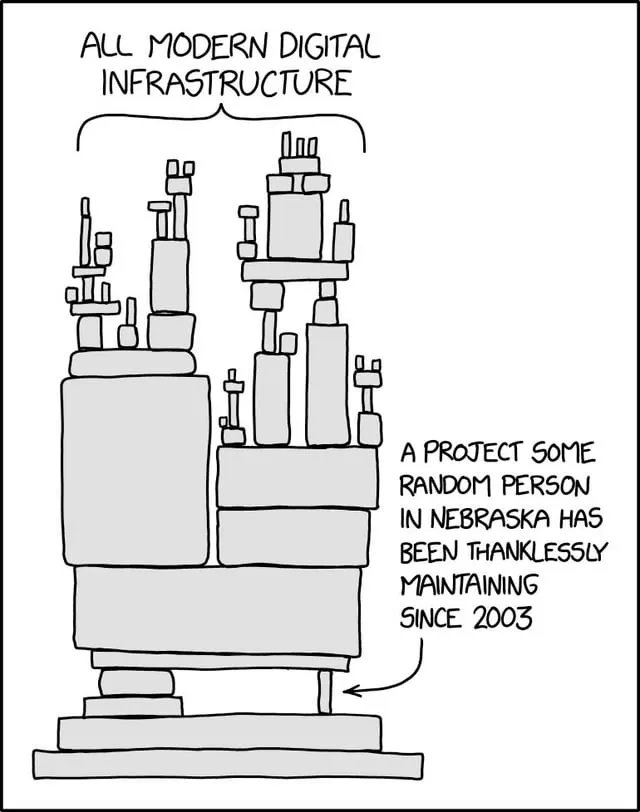
Open source in one image (source: xkcd)
The Third Door
This isn't either/or. Closed source gives you performance without transparency. Open source gives you transparency without performance. Neither gives you trust.
Our solution solves both: competitive evaluation with real economic incentives.
This is the model ORO built on Bittensor, and it has deep parallels to the most successful allocation systems in the economy.
The best allocation systems work by creating arenas where participants compete on measurable outcomes, where scores are public, and a meritocratic system where the best rise to the top.
This is what Bittensor makes possible that open source alone can't. Open source gets you contributions. The more contributions, the better tuned our evals become.
This is what we are building on Bittensor. We've already beaten OpenAI in one of the hardest shopping evals in just 3 weeks. This is just the beginning.
Open source + Proper incentives = The fastest, most effective, most aligned research flywheel in the world.
We're starting with shopping but it's just the first stop.
The agents will get better. The leaderboard will expand. The system we built with continuous evaluations, a public leaderboard, and competitive incentives works for any domain where the quality of the work is measurable. The agent economy is the largest economic platform in history and it doesn't have a trust layer yet.
It is mission critical to the future of humanity that we make this succeed.

